
Your Roof Saviour
Your Roof Saviour
Home » How to Fix a Leaking Roof: Diagnosis and Repair Guide (Australia)
Water stops for nothing. It finds the smallest gap, follows a rafter for three metres, then drips down somewhere that has nothing to do with where it actually got in. That’s the tricky part about a leaking roof. The ceiling stain rarely sits directly under the damage.
This guide walks through how roofers actually track down a leak, what the repair process looks like once they find it, and which fixes are safe to attempt yourself. We’ll also cover the specific trouble spots (flashing, tiles, metal roofing) that cause most leaks across Australian homes.
Here’s something most people don’t expect. Water doesn’t fall straight down once it enters a roof cavity. It runs along the underside of roofing sheets, follows rafters, pools on sarking, and only drips through the ceiling once it hits a low point or a gap in the insulation. So the wet patch on your ceiling might sit two or three metres from where the actual damage is.
This is exactly why a proper roof leak repair starts with inspection, not guesswork. A roofer climbing straight to the stain and patching whatever they find there is taking a punt. Real diagnosis means checking the roof from above during dry weather, tracing valleys and flashing joints, and sometimes running water over sections with a hose to recreate the leak and watch where it travels.
A handful of culprits show up again and again.
Tiles crack from foot traffic, hail impact, or age related brittleness. A single cracked tile doesn’t always leak straight away, but once it does, water finds its way under the tile below and works its way inward from there.
Flashing seals every join where the roof meets something else. Chimneys, skylights, valleys, and walls all rely on flashing to stay watertight. Sealant dries out over time. Metal corrodes. Movement in the building shifts the join just enough to open a gap, and that’s usually all it takes.
Valleys collect more water than any other part of the roof, simply because two roof planes drain into them. Debris builds up here too. Leaves and twigs block the flow, water pools, and eventually it finds a way through even a small gap in the valley lining.
Older tiled roofs use a cement bedding and pointing system to hold ridge capping in place. This cement cracks and crumbles with age, particularly in areas with strong temperature swings. Once it fails, wind driven rain gets straight under the ridge caps.
Metal roofing relies on screws with rubber washers to stay sealed. Those washers perish eventually. Rust spreads from a compromised fastener outward. Neither problem looks dramatic from the ground, but both let water in steadily over time.
A proper diagnosis usually follows a logical sequence, even if it doesn’t look that way from the ground.
First, they’ll inspect the ceiling stain and work out roughly which direction the water travelled to reach that point. Ceiling stains almost always sit downhill from the actual entry point, so this gives a rough search area rather than an exact location.
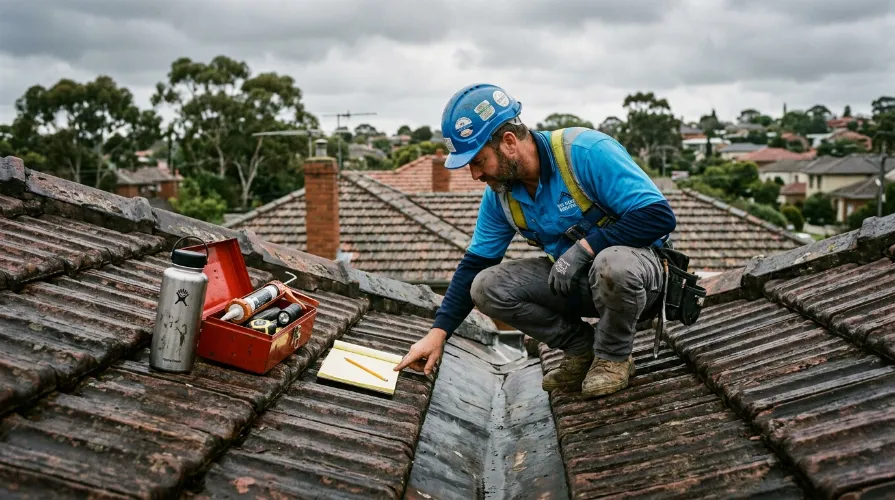
Next comes a roof inspection during dry conditions, checking tiles, flashing, valleys and any penetrations like vents or skylights for visible cracks, gaps, or deteriorated sealant. Roofers know the usual suspects and check those areas first.
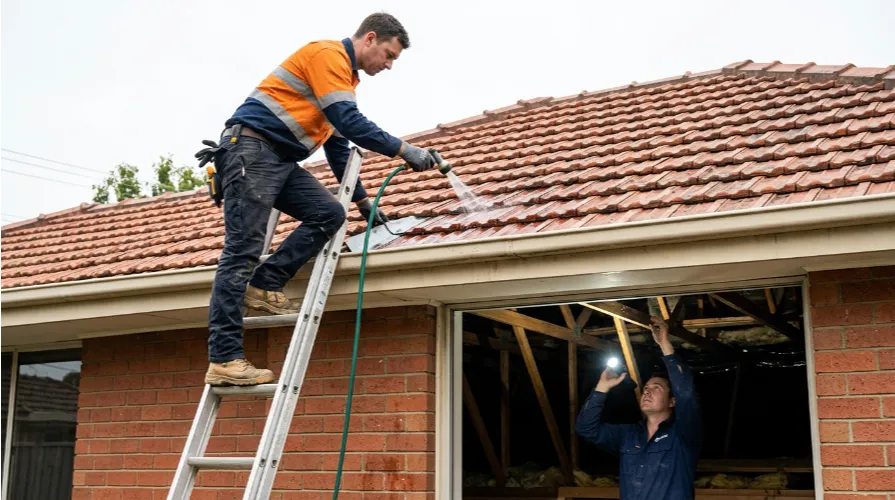
If nothing obvious turns up, a hose test recreates the conditions of a rain event. Water gets run slowly over one section at a time while someone checks the ceiling cavity below, isolating exactly which area causes the leak.
Once the source is confirmed, the actual repair usually takes far less time than the diagnosis did.
Our roof leak repair page covers this full process in more detail, including what to expect during an inspection visit.
Sometimes you need to stop water getting in right now, and a proper repair has to wait until conditions allow safe access. A few temporary measures buy you time without making the underlying problem worse.
Inside the house, move furniture and valuables away from the affected area, then place a bucket or container directly under the drip. Puncturing a small hole in a ceiling bulge (if water is pooling and threatening to burst through on its own) can actually help, since it releases the pressure in a controlled way rather than letting the ceiling collapse unexpectedly. This sounds counterintuitive, but a controlled release causes far less damage than an uncontrolled one.
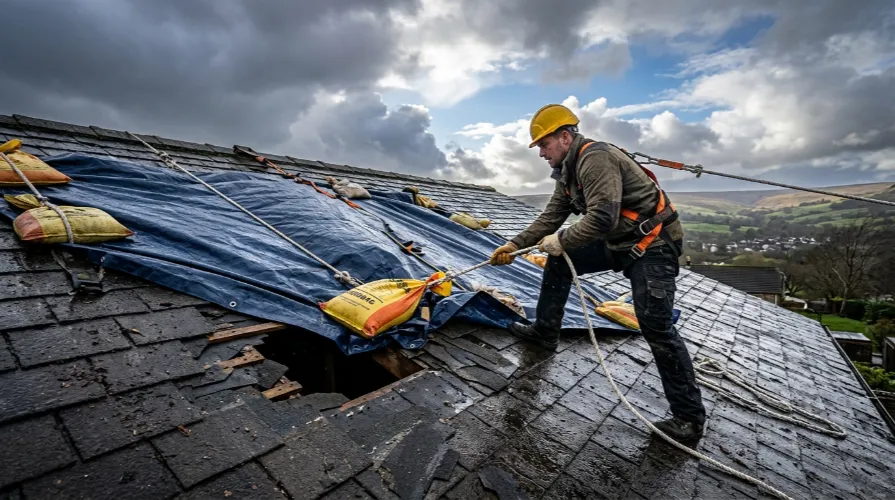
Outside, a tarp secured over the affected roof section stops further water ingress, but this job genuinely isn’t safe to attempt yourself in wet or windy weather. Wet roofing surfaces get slippery fast, and a fall risk on a normal dry day becomes a serious hazard once rain is involved. This is a job for a professional with the right harness and access equipment, even as a temporary fix.
Fixing cracked or broken tiles looks simple from the ground, but there’s a right way to do it.
The damaged tile gets carefully lifted, along with the tiles immediately surrounding it, since roof tiles overlap and interlock. A replacement tile matching the existing profile and colour goes in, then the surrounding tiles get reset to restore the correct overlap pattern. Getting this overlap wrong is a common DIY mistake. It looks fine visually but leaves gaps that let water through during the next heavy rain.
Matching tile colour and profile matters more than people expect too, particularly on older roofs where the original tile range might be discontinued. A good roofer keeps a stock of common profiles and can source a close match when needed.
Because flashing failures are such a common leak source, it’s worth understanding what the actual repair involves.
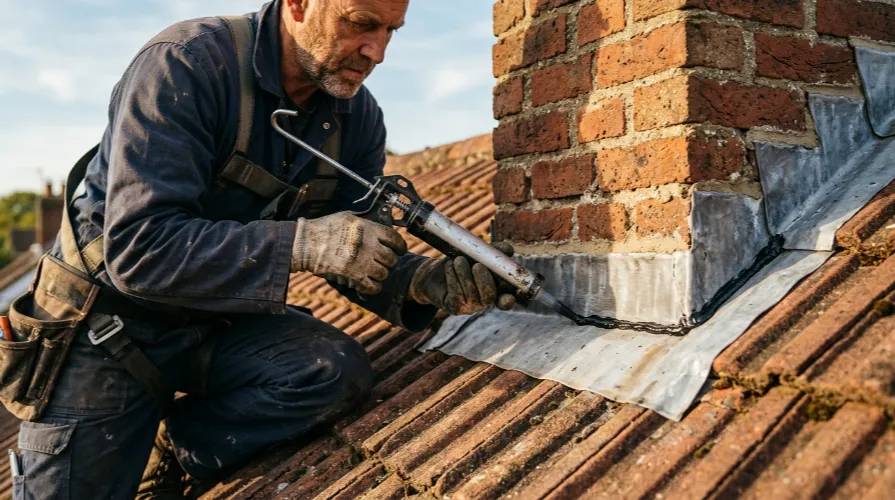
Depending on the extent of the damage, a flashing repair might mean resealing an existing flashing with fresh sealant, replacing a section of flashing that’s corroded or physically damaged, or reworking the flashing profile entirely if the original installation was done incorrectly. That third scenario comes up more often than you’d think, especially on older homes where flashing wasn’t installed to current standards in the first place.
Chimney flashing tends to fail first among all flashing types, largely because chimneys experience the most movement relative to the roof structure due to thermal expansion. If you’ve got a persistent leak near a chimney that keeps recurring despite previous patches, the flashing itself, not just the sealant, is worth a proper look.
For a deeper look at how this repair works across different roof types, check our roof flashing services page.
Metal roofs leak differently to tiled roofs, and the fix reflects that.
Old screws with perished washers get removed and replaced with new fasteners that include fresh rubber seals. This sounds minor, but a metal roof with dozens of failed washers across its surface can leak in multiple spots simultaneously, and each one needs addressing individually.
Small rust holes can sometimes be patched with appropriate metal roofing compound, but larger rust damage generally means replacing the affected sheet outright. Patching over structurally compromised metal is a short term fix at best.
Metal roof leaks often originate at the seams between sheets or along the ridge capping, rather than through the sheet surface itself. These joints rely on correct overlap and fastening, and both degrade slowly over years of thermal expansion and contraction.
Our metal roofing service page has more on repair options specific to Colorbond and steel roofing.
Older tiled roofs with cement bedding and pointing eventually need this system redone as it ages. The old cracked cement gets removed, and either fresh cement pointing or a flexible modern alternative goes back in its place. Flexible pointing systems have become more common in recent years because they handle thermal movement better than traditional cement, meaning fewer repeat repairs down the track.
If your roof has visible cracking along the ridge line, or you can see daylight under any ridge caps from inside the roof cavity, this is usually the cause. Our roof re-bedding services page covers this process in more detail.
Sometimes what looks like a simple leak is actually a symptom of the roof reaching the end of its useful life. If leaks keep appearing in different locations across the roof, if tiles are cracking faster than they can reasonably be replaced, or if an inspection reveals widespread wear rather than one isolated fault, patching individual leaks becomes a losing game.
In these situations, a full roof restoration often works out cheaper over a few years than continuing to chase leaks one at a time. Our professional roof restoration page explains what that process involves and how to tell if your roof has reached that point.
For a genuinely minor issue, like a small gap around a vent pipe that you can safely reach and reseal with proper roofing sealant, a careful homeowner can sometimes handle it. That’s about where the DIY line should stop, though.
The risk isn’t just the physical fall hazard, real as that is. It’s also the diagnostic risk. Patch the wrong spot, and the actual leak keeps running unseen while you think it’s fixed. Weeks later, the damage has spread further than if you’d called a professional in the first place. If there’s any uncertainty about where the water’s actually coming from, or if the roof is steep, wet, tiled rather than a simple flat surface, get a proper inspection before reaching for a tube of sealant.
Why does my roof leak only during heavy rain?
Light rain often doesn’t generate enough water volume or wind driven pressure to push through a small gap, while heavy or wind driven rain forces water through the same weak point. This is actually a useful diagnostic clue. Leaks that only appear in heavy weather usually point to flashing or valley issues rather than a large obvious hole.
How do I find where my roof is actually leaking?
Start by checking the roof during dry weather for cracked tiles, damaged flashing, or blocked valleys near where the ceiling stain sits, keeping in mind the leak point is often uphill from the stain itself. If nothing’s obvious, a controlled hose test recreates rain conditions so you can watch exactly where the water enters.
Is it safe to walk on a wet roof to check for leaks?
No. Wet roofing surfaces, particularly tiles and metal sheeting, become significantly more slippery than dry surfaces, and this applies even on roofs with a gentle pitch. Leave any wet weather inspection to a professional with proper safety equipment.
How long does a roof leak repair usually take?
A straightforward leak with an obvious cause, like a single cracked tile or a small flashing gap, typically gets fixed within a few hours. More complex leaks that require a hose test to diagnose, or that involve multiple failure points, can take a full day between diagnosis and repair.
Can a small roof leak cause serious damage if I leave it?
Yes, and this happens more often than people expect. Even a minor leak lets moisture into timber framing and insulation over time, which can lead to rot, mould growth, and a much larger repair bill than addressing the original leak would have cost.

Protecting your home and business with expert roofing solutions built on quality, integrity, and decades of industry experience.
© 2026 AllYourRoofingNeeds By NextServe. All Rights Reserved.