
Your Roof Saviour
Your Roof Saviour
Cracked mortar and loose ridge tiles are a storm waiting to cause serious damage. Our roof ridge repair teams re-bed and re-point to the highest standard — securing every tile, sealing every joint, and backing the work with a 10-year workmanship guarantee.
Submit the form
Consultion
Roof Service
Residential Projects
Commercial Projects
Trained Roofers
Satisfied Clients

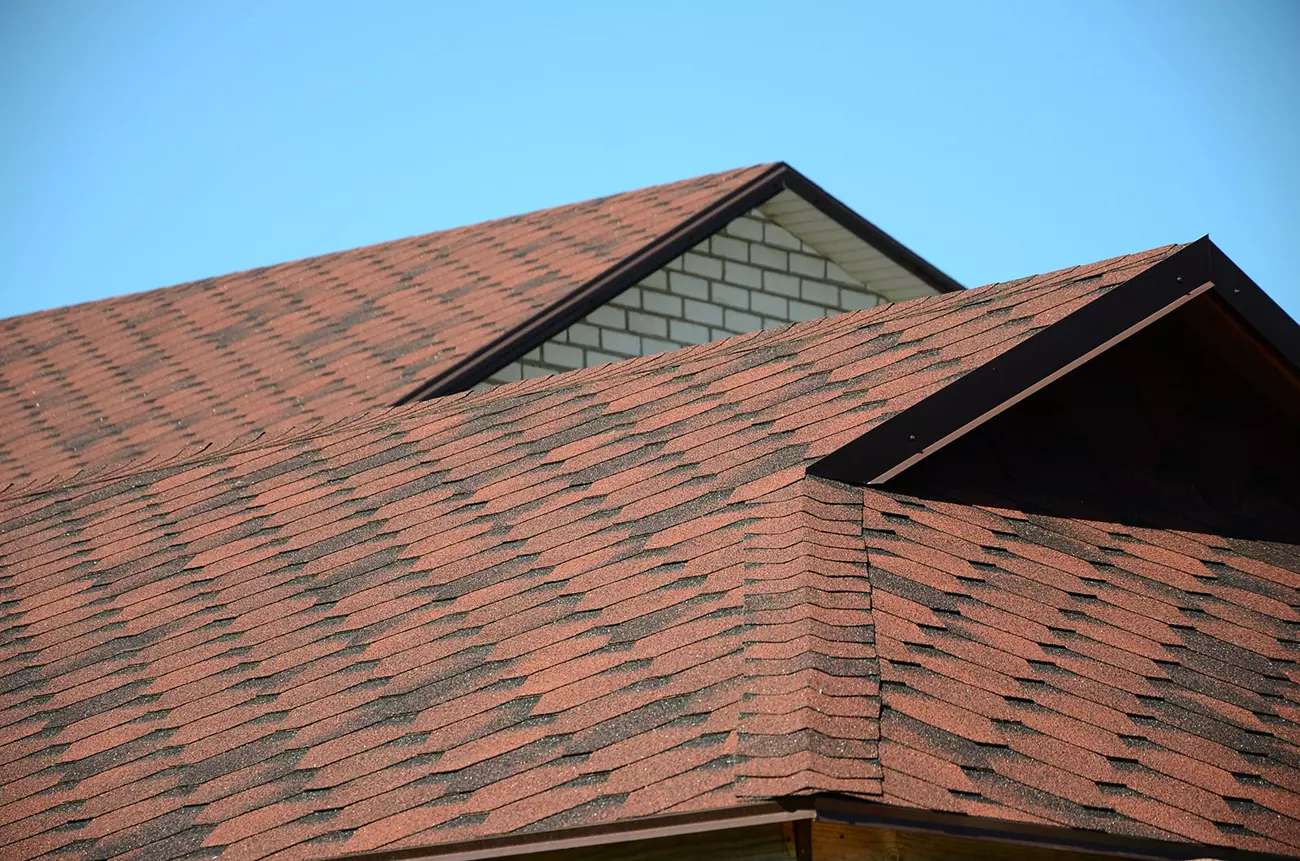
1250+ more then clients in global reviews
The mortar bed beneath your roof ridge tiles has a fixed lifespan. Standard cement mortar carbonizes over time, losing the flexibility and bond strength it had when first applied. As a result, it cracks, separates from the tile underside, and allows water to track into the roof cavity at the highest point of the roof. Furthermore, once the mortar bed fails, the tiles above it are no longer mechanically supported. They rely only on gravity and friction to stay in place. A single strong gust of wind can then lift or displace them entirely.
Roof re-bedding is the process of removing all failed mortar from beneath the ridge tiles, re-seating each tile on a fresh flexible polymer mortar bed, and applying new pointing compound to the exposed joints. At All Your Roofing, we use a two-stage mortar system throughout. First, we apply a flexible polymer-modified bedding mortar that accommodates thermal movement without cracking. Then we finish with a matching flexible pointing compound rather than rigid cement. As a result, the new mortar system resists the thermal cycling that causes standard cement to fail within five to eight years.
A displaced or missing ridge tile is an urgent repair. Exposed ridge lines allow water direct entry into the roof cavity with every rainfall. Therefore, we offer same-day emergency response for storm-damaged ridges across all major metro areas
Not all ridge capping repair jobs are the same scale. Some ridges have isolated mortar failure across a few tiles. Others have systemic mortar failure across the full ridge length.
Every roof re-bedding job we complete is backed by a full 10-year transferable workmanship warranty. Moreover, we use polymer-modified mortar products that carry their own manufacturer performance warranty for flexibility and adhesion.
The most common reason roof re-bedding fails prematurely is the use of standard rigid cement mortar. Cement is strong in compression but brittle under the tension created by thermal expansion and contraction.
Every technician is licensed under QBCC, NSW Fair Trading, and all relevant state equivalents. Additionally, all team members hold current Working at Heights certifications and are covered by $20M public liability insurance.
Ridge capping repair costs should reflect what the ridge actually needs, not a default full re-bed on every job. You receive a firm written quote itemized by the number of tiles requiring re-bedding, the number requiring replacement, and the full pointing scope.
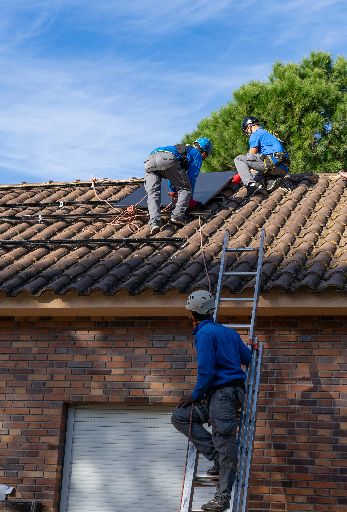
1250+ more then clients in global reviews
An unsecured roof ridge tile becomes a projectile in storm wind conditions. Furthermore, it is a legal liability. If a displaced ridge tile damages a neighboring property or a vehicle, or injures someone, the property owner carries responsibility for the damage
The ridge is the highest point on a tiled roof and the point of most complex tile geometry. Consequently, it is also the most critical weatherproofing point. When ridge mortar fails, water enters the roof cavity directly at the apex of the structure and travels the full length of the sarking before finding a drip point.
A ridgeline with visible cracked or missing mortar is one of the first things a building inspector identifies in a pre-purchase report. Moreover, it is one of the most common reasons buyers request a price reduction or seek further specialist reports before exchanging contracts.
Failed ridge mortar does not cause only ridge-level damage. Water that enters at the ridge saturates the sarking beneath, wets the top of the wall framing, and in persistent cases causes timber rot in rafters and top plates.
Walk along most rooflines and you won’t notice the ridge capping at all. That’s the point, it’s meant to blend in and just do its job quietly. But mortar doesn’t last forever. Years of heat, cold, and constant movement crack it, crumble it, and eventually let it fall away entirely. Once that happens, your ridge tiles have nothing holding them in place anymore.
Roof re-bedding fixes exactly this. We remove the old, failed mortar, clean the ridge line properly, then rebed each tile with fresh mortar designed to flex rather than crack under the same thermal stress that killed the last batch.
Mortar and roof tiles expand and contract at completely different rates. Every hot day, every cold night, that mismatch stresses the bond between them just a little more. Give it ten or fifteen years and cracks show up. Give it longer, and whole sections just come loose.
Ridge capping repair deals with this reality head-on rather than pretending a quick patch will hold. We don’t just fill visible gaps. We check the full ridge line for any section showing early signs of failure, because if one part’s gone, nearby sections usually aren’t far behind.
Not every ridge issue calls for the full treatment. A small section with minor cracking? That’s often a targeted roof ridge repair, patched and reinforced without pulling up the whole ridge line. Widespread failure across most of the roof, though, that’s when full re-bedding actually makes sense financially. Patching six different spots over two years costs more than doing the whole ridge properly once.
We’ll tell you honestly which category your roof falls into. There’s no upside in selling a full rebed job to someone who only needs a repair.
Loose mortar doesn’t just crumble away quietly, it lets ridge tiles shift, crack, or slide right off during a storm. Ridge tile repair goes hand in hand with rebedding for this reason. Replacing a cracked ridge tile without fixing the mortar underneath just means you’re back up there again within a year.
Secure ridge tiles these days rely on more than mortar alone. Flexible pointing compounds and mechanical fixing systems now back up the traditional mortar bed, giving the whole ridge line extra resistance against wind uplift during storms. We use these modern methods alongside traditional rebedding, particularly on properties in cyclone-prone or high-wind regions.
Roof ridge tiles sit at the highest, most exposed point of any roof, so they cop more weather stress than almost anywhere else up there. Neglect this area and it’s not just a cosmetic issue. Water finds its way in through failed ridge capping just as easily as it does through cracked field tiles, sometimes worse, because ridge failures often go unnoticed until water’s already tracking down into the ceiling cavity.
That’s part of why re-bedding roof work pairs so well with a broader inspection. Catching ridge issues early, before mortar’s fully crumbled, keeps the job smaller and cheaper.
If your roof’s dealing with issues beyond the ridge line, our roof restoration team can look at the whole picture rather than just the capping. And if a wash uncovers ridge damage you didn’t know about, our roof washing crew flags it during the same visit so nothing slips through unnoticed.
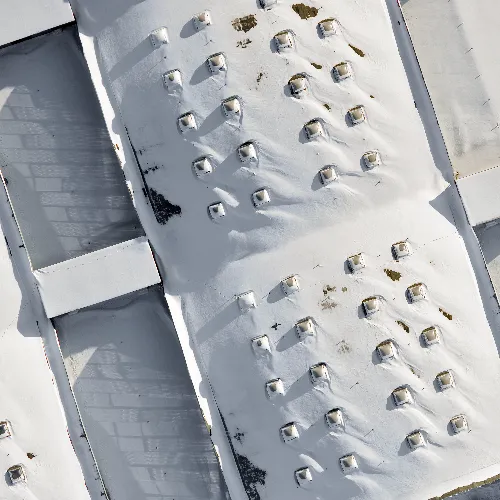
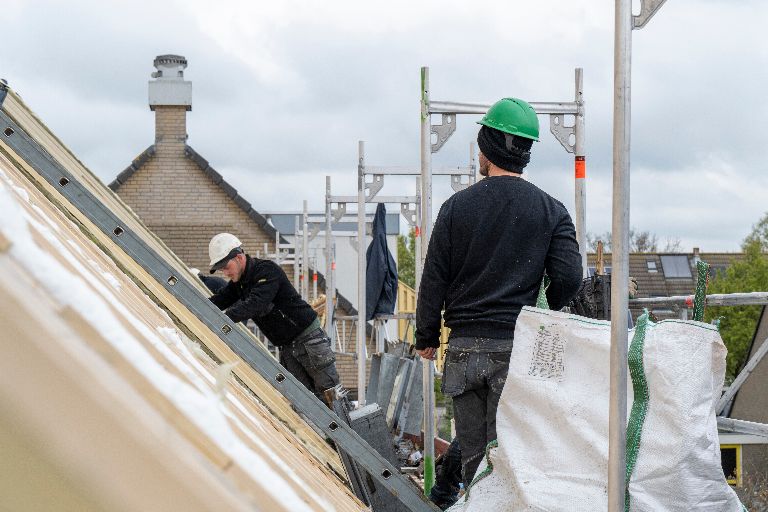
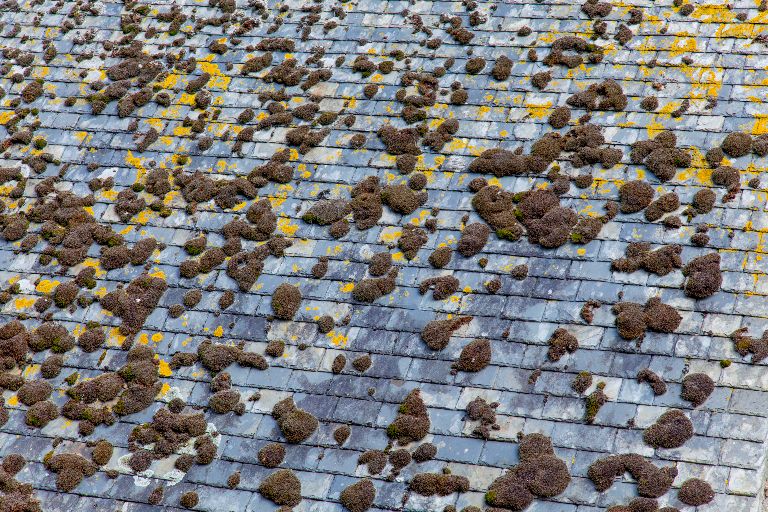
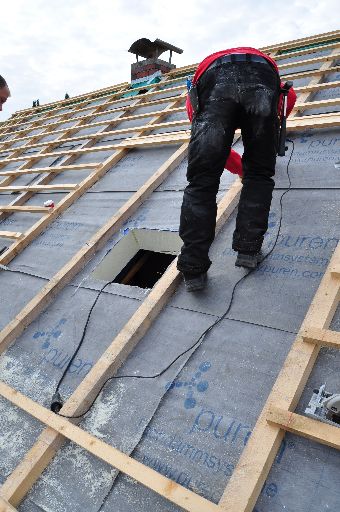
A full re-bedding roof service covers the complete ridge line from one end of the building to the other, including all hip ends on hipped roofs and all gable apex tiles on gable-ended roofs. Every tile is lifted, the failed mortar is mechanically removed, and each tile is re-seated on a fresh polymer-modified mortar bed before pointing is applied.
Our partial ridge tile repair process follows the same preparation and mortar standards as a full re-bed. We never simply apply new mortar over failing old mortar. Consequently, each targeted section receives fully removed and replaced mortar, not a patch applied over the existing bed. Additionally, we photograph the full ridge line before and after to confirm the repaired sections and to document the condition of areas not included in the current scope. As a result, the client has a complete record of the ridge’s condition at the time of the repair.
Hip ends: The angled ridgelines that run from the apex down to the eaves on hipped roofs carry a different mortar profile than a straight ridge. The geometry of the hip junction requires the mortar bed to be shaped and finished at a compound angle, which makes it more prone to separation at the underside of the tile. Furthermore, the hip end carries higher wind uplift loading than the flat ridge sections. Therefore, ridge capping repair at hip ends benefits most from flexible polymer mortar systems that accommodate both the angular geometry and the higher movement demands of the location.
Heritage homes with original terracotta roof ridge tiles require a specific approach to roof re-bedding. The original tiles are often irreplaceable. Therefore, we handle every lifted tile with the same care we would give to any irreplaceable heritage material. We carry padded storage cradles for ridge tiles during the re-bedding process to prevent edge chipping or surface damage while tiles are off the roof.



These two terms are often used interchangeably but they describe different stages of the same process. Roof re-bedding refers to removing the old mortar from beneath the ridge tile and replacing it with a fresh mortar bed that re-seats and structurally supports the tile.
Several signs indicate that ridge capping repair or a full roof re-bedding may be needed. From the ground, look for cracked or missing pointing along the ridge tile joints, visible gaps between the tile base and the roof surface, or tiles that appear to be sitting unevenly or at slightly different angles to their neighbours
A properly executed roof re-bedding using flexible polymer-modified mortar typically lasts 20 to 25 years under normal Australian conditions.
A properly executed roof re-bedding using flexible polymer-modified mortar typically lasts 20 to 25 years under normal Australian conditions.
Roof re-bedding costs depend on the length of the ridge line, the number of hip ends, the pitch of the roof, and whether any roof ridge tiles require replacement.
In most cases, yes. We carry stock of the most common roof ridge tiles profiles used across Australian residential construction. For older or discontinued profiles, we access heritage tile suppliers and salvage networks.
Roof re-bedding is one stage of a full roof restoration. A complete restoration typically includes high-pressure cleaning, individual tile inspection and replacement, full ridge re-bedding and re-pointing, valley and flashing inspection, and the application of a protective coating across the full tile surface
Insurance coverage for roof ridge tiles depends on the cause of the damage. Storm and wind events that displace tiles are typically covered under most home and contents policies. However, mortar failure from age and lack of maintenance is almost universally excluded as a maintenance issue rather than an insurable event.
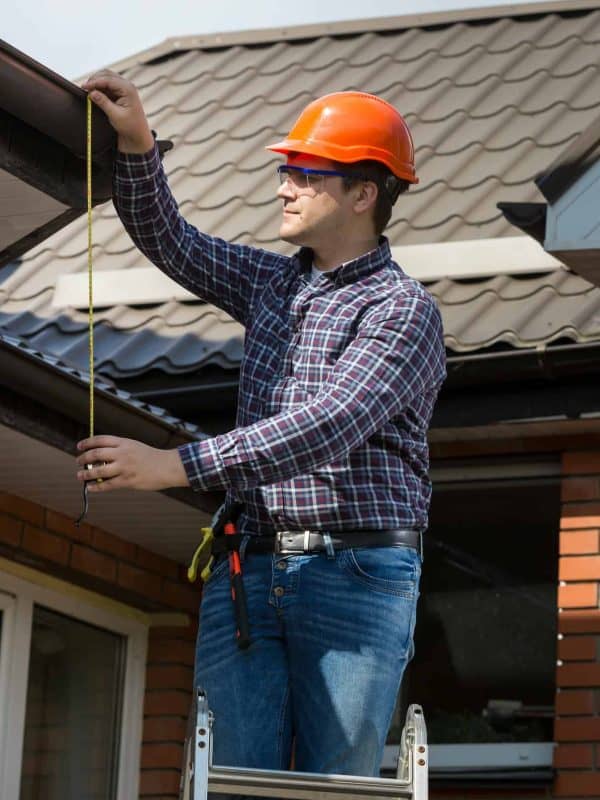
One of our roof ridge repair specialists will contact you within two hours. You receive a no-obligation quote, a free on-site ridge inspection, and a written condition report confirming exactly which tiles require attention and why. Whether you need a full roof re-bedding programme, targeted ridge tile repair on a specific section, or a ridge capping repair before listing your property for sale — we are available this week and ready to help.

Protecting your home and business with expert roofing solutions built on quality, integrity, and decades of industry experience.
© 2026 AllYourRoofingNeeds By NextServe. All Rights Reserved.