
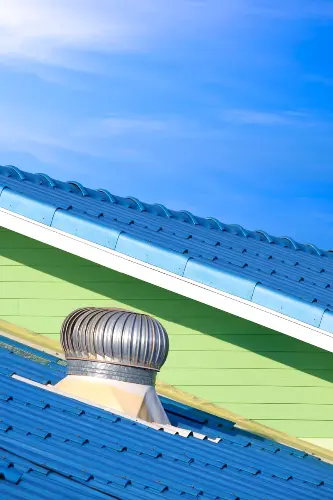
A hot roof cavity costs you money every day. Our whirlybird installers fit proven roof ventilation systems that reduce ceiling temperatures, cut cooling costs, and protect your roof structure from heat and moisture damage. Same-day available. 10-year workmanship guarantee.
Submit the form
Consultion
Roof Service
Residential Projects
Commercial Projects
Trained Roofers
Satisfied Clients
1250+ more then clients in global reviews
On a typical Australian summer day, an unventilated roof cavity can reach 60 to 70 degrees Celsius. That heat does not stay in the ceiling space. It radiates downward through insulation into living areas, forcing air conditioning systems to work harder throughout the day. Consequently, energy bills rise and indoor comfort falls even with the air conditioning running. Whirlybird installation addresses this directly. A properly specified set of roof whirlybird vents continuously draws hot air out of the roof cavity and replaces it with cooler outside air as the turbine spins in the breeze.
At All Your Roofing, our whirlybird installation service begins with a ventilation assessment rather than simply counting vents. First, we calculate the volume of your roof cavity. Then we determine the correct number and placement of whirlybird roof vent units to achieve adequate air changes per hour for your specific roof geometry and local wind conditions. Furthermore, we assess existing eave ventilation and ridge capping details to ensure intake air can enter freely. As a result, every installation is a correctly engineered roof ventilation solution rather than a generic vent count.
Most whirlybird installation jobs are completed in a single visit of two to four hours. Therefore, we offer same-day and next-day scheduling across all major metro areas so you do not have to wait through another hot week before getting relief.
The number and placement of roof whirlybird vents has a significant effect on how well the system performs. Too few vents and the roof cavity remains hot. Too many on a poorly sealed ceiling plane and you draw conditioned air from the living space into the cavity — which costs you energy rather than saving it.
Every whirlybird installation we complete is backed by a full 10-year transferable workmanship warranty covering both the installation and the weatherproofing of each penetration. A professionally installed roof ventilation system from our team is a warranted improvement to the building
Reducing peak roof cavity temperature by 10 to 20 degrees Celsius through whirlybird installation directly reduces the heat load on your ceiling insulation. As a result, air conditioning systems run for shorter cycles, use less electricity, and produce less carbon output.
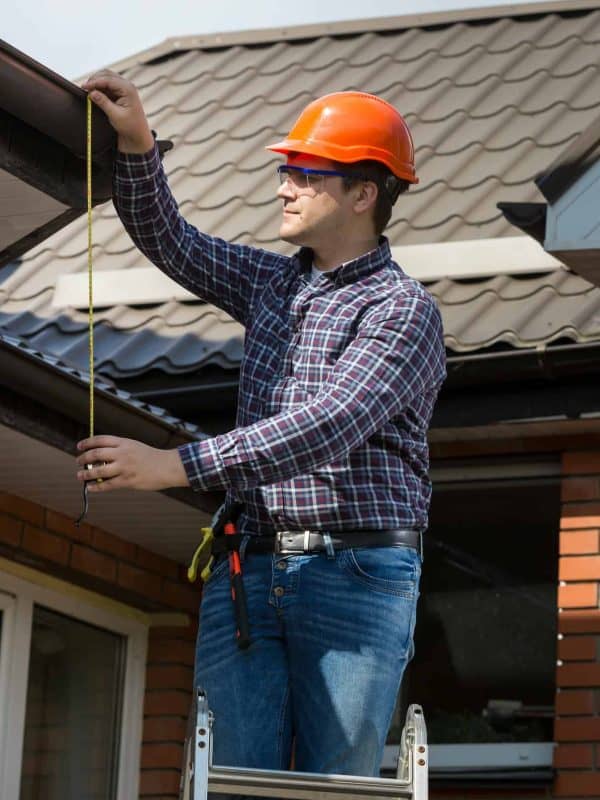
Whirlybird installation involves cutting penetrations through a weatherproofed roof surface. Consequently, it must be done by a licensed roofing tradesperson — not a general handyman or a labourer. Every member of our installation team holds current roofing licences and Working at Heights certifications.
Whirlybird installation is among the most cost-effective comfort and energy improvements available to homeowners. The material and labour cost of a standard residential installation is modest compared to the ongoing energy savings it produces.
1250+ more then clients in global reviews
A roof cavity at 65 degrees conducts heat into your living space even through quality insulation. As a result, air conditioning systems compensate by running longer and harder.
Extreme heat cycling degrades roofing materials faster than almost any other factor. Timber rafters, battens, and sarking membranes all deteriorate more rapidly under sustained high-temperature exposure.
Insulation batts exposed to repeated extreme heat cycles lose their thermal resistance rating over time. Additionally, moisture accumulation in poorly ventilated cavities causes insulation to compact
Unlike air conditioning upgrades, solar systems, or mechanical ventilation systems, a whirlybird roof vent has no electricity requirement, no filter to replace, and no motor to service. The turbine spins in natural wind and requires no maintenance beyond an annual visual check
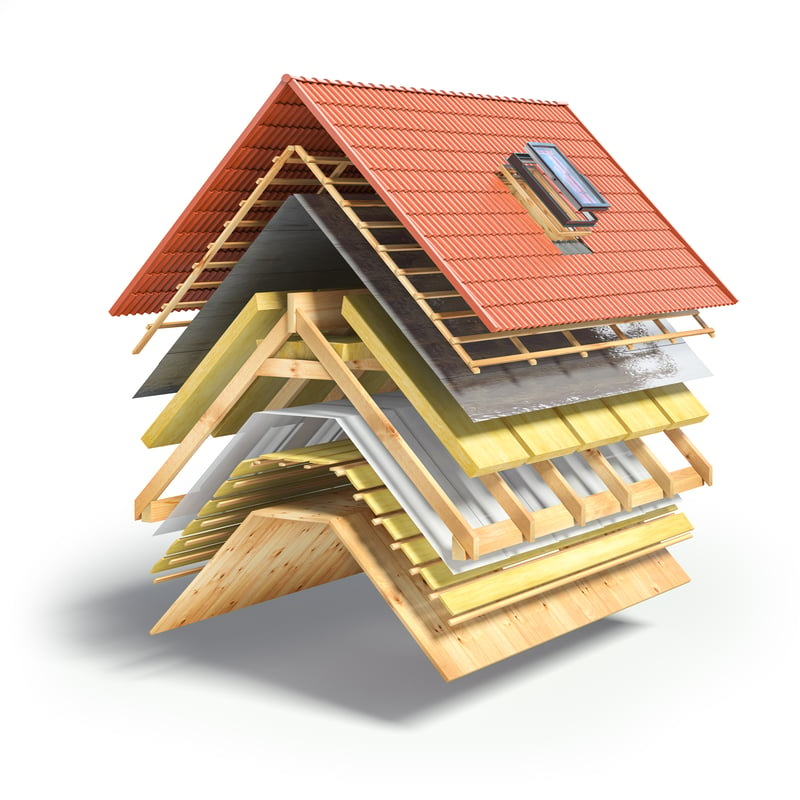
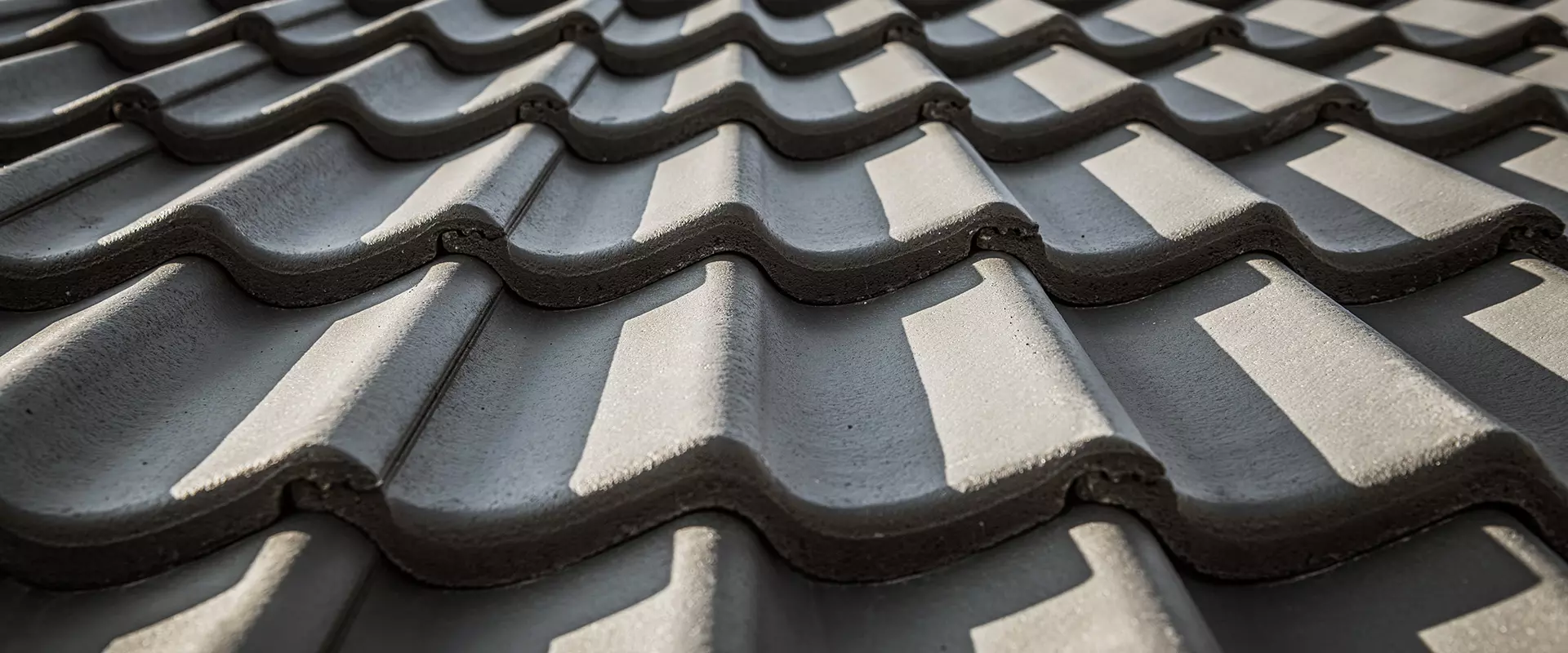
Whirlybird roof vent installation technique differs between tile and metal roof types, and both require the right approach to remain permanently weathertight. For tile roofs, we cut a precise opening through the relevant tile, install a purpose-made tile replacement flashing base, and seat the whirlybird neck directly into the flashing collar. As a result, the penetration is sealed at the tile plane rather than relying on sealant applied over the tile surface — which degrades and fails within a few years.
For new builds and major renovations, roof ventilation systems should be designed during the roof framing and sarking stage rather than retrofitted after the roof is on. Consequently, we work directly with builders and project managers to specify the correct whirlybird installation layout at the design stage. This allows eave ventilation, ridge venting, and roof whirlybird vents to be coordinated as a single balanced system rather than added individually as an afterthought.
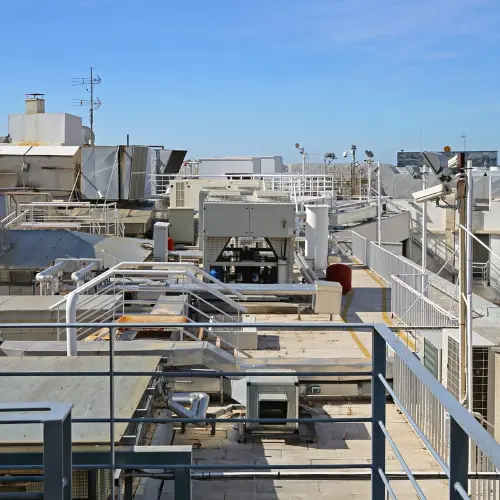
Commercial and industrial buildings accumulate significantly more heat in their roof cavities than residential homes. However, they are also often the buildings where the investment in roof ventilation delivers the largest financial return. A single large warehouse with an unventilated corrugated steel roof can see cavity temperatures exceed 80 degrees Celsius on peak summer days. As a result, the working environment below becomes uncomfortable and potentially hazardous to staff.
Our replacement service removes the existing unit and base flashing entirely, re-flashings the penetration with a new purpose-made base, and installs a new quality whirlybird roof vent unit. Additionally, if the existing penetration count is insufficient for the roof cavity volume, we advise on adding further units at the same time to bring the roof ventilation system up to an adequate specification. As a result, you receive a fully renewed system rather than a like-for-like swap.
The correct number of roof whirlybird vents depends on the volume of your roof cavity, the roof pitch, the number of existing eave vents, and the ceiling plane’s air tightness. However, as a general guide, a typical Australian home of 200 to 250 square metres requires three to five whirlybird roof vent units for adequate ventilation.
Roof whirlybird vents are most effective in breeze conditions. However, they still provide passive ventilation through natural convection on still days because hot air rises and exits through the turbine opening even without rotation.
A correctly installed whirlybird roof vent with a properly fitted and flashed base does not leak in normal or even heavy rainfall. However, the key word is correctly installed. A whirlybird roof vent installed with silicone sealant over the tile or sheeting surface.
Most residential whirlybird installation jobs are completed in two to four hours, including the ventilation assessment, cutting, flashing, and installation of all units. Furthermore, for homes where access is straightforward, same-day bookings are often possible for jobs booked before noon.
Yes. Whirlybird installation is suitable for all standard roof types including terracotta and concrete tile, Colorbond and Zincalume metal sheeting, corrugated iron, and fibreglass and polycarbonate sheeting. However, each roof type requires a different flashing base and installation method.
A whirlybird roof vent is a wind-driven turbine ventilator. It is the most cost-effective and most commonly used form of active roof roof ventilation in Australian residential applications. However, several alternatives exist. Ridge venting is a passive system that relies on thermal convection along the full ridge line. Solar-powered ventilation fans use a photovoltaic panel to drive a powered fan regardless of wind conditions.
Quality whirlybird roof vent units with sealed ball bearings are virtually silent in operation. However, older units with worn bearings, or low-quality units installed by non-specialist contractors, can develop a rattling or grinding noise as the bearing degrades.
In most cases, whirlybird installation on a standard residential or commercial roof does not require council approval. It is classified as routine roof maintenance in most Australian states and territories
One of our whirlybird installers will contact you within two hours. You receive a no-obligation ventilation assessment, a fixed-price quote, and a confirmed installation booking that suits your schedule. Whether you need a single whirlybird roof vent replaced, a full roof ventilation system installed, or you found us searching for whirlybird installation near me — we are available this week and ready to help.
Protecting your home and business with expert roofing solutions built on quality, integrity, and decades of industry experience.
© 2026 AllYourRoofingNeeds By NextServe. All Rights Reserved.